Showing posts with label On the road - SA. Show all posts

19 February 2010

Days 161-162 Mount Gambier (17-18 Feb)

Brushtail possum - Umpherston Sinkhole Brushtail possum - Umpherston Sinkhole Baby brushtail  Mum and baby - unfortunately people feed them

Wednesday night John and I went to one of the local Rotary meetings.  They have 3 clubs here.  This particular club is the oldest in town and formed in 1928. They were up to meeting number 3989!  They have about 30 members.  A very friendly club.  It was held at the local RSL club.  We must start going to the RSL’s more often as generally you can get well priced meals and drinks.  Had a go on the 1c pokies and lost my $1.00 (damm!).  Following this we revisited Umpherston Sinkhole to see the brushtail possums feeding at night.  Saw a couple, they are tame to a point particularly if you have food for them (not a good thing).  The baby was cute and was keen to jump on mom’s back when she climbed away.

Thursday we did a tour to Blue Lake.  Blue Lake is a dormant volcano with the crater bottom sitting below the water table.  The lake supplies Mount Gambier with its water.  The water is pristine, they only add minimal chlorine too get rid of any bacteria that may be present.  The lake is 1km by 600m wide and is 70m deep.  It holds 36,000ML and approx. 10% is drawn per annum.  The water temperature ranges from 10-20 degrees and averages at 16.  The most amazing feature of this lake is how blue it is during the summer months.  There have been many theories and the latest scientific explanation is that during winter when the water is cooler, calcium carbonate is more dense and is suspended closer to the surface turning the water a blue/grey colour whereas in summer as the water temperature warms the carbonate can move down towards the bottom leaving more pure water towards the top, hence its blueness.


17 February 2010

Day 160 – Mount Gambier (16 Feb)

Weather has improved somewhat and is lovely and sunny so we spent the day sightseeing.  Our first stop was Little Blue Lake about a 10 minute drive from town.  Little Blue Lake is a sinkhole and is the local swimming hole.  The facilities around it are maintained but unfortunately the lake does have some blue green algae but not enough to really stop you getting in (if it was warmer).  The water temperature varies from 10-15 degrees and we were told by some locals that is more than 35m deep.  It would be fantastic to have a dip on a hot day.  Our next stop was Mt Schank, about 15 minutes drive from town.  Mt Schank is a dormant volcano and one of the youngest.  It is a 158m steep climb to the crater rim but well worth the effort.  I ventured into the bottom of the crater (unique thing to do) and it was great.  So quiet.  The trek down was via an overgrown track and there were lots of lizards but no snakes thank goodness.  It was very hot down there and no shade but I’m glad I did it as is it not something you can do often.  After the walk up to the top John opted to stay put.  I read on the display down in the carpark that there is no guarantee that even a dormant volcano won’t erupt again but would follow an earthquake.  Sobering to know I would have had a warning whilst down there!  Our next stop was the seaside town of Port MacDonnell, 27km south of Mount Gambier and the closest beach.  Amazing the drop in temperature here and similar to the Eyre Peninsula in that the ocean is very tidal and it was out.  We found a bay called Camel Rock and it had lots of white rocks on the beach which we hadn’t come across before.  The Southern Ocean sure is cold though, wonder how often anyone gets in the water.  Next we stopped at Ewen Ponds which is reported to be a good snorkelling and diving site.  The only place in Mount Gambier where you can swim in caves without a certified divers licence. There are three ponds that link and the maximum depth is 11m.  The water is so clear and it was a magic place and we were tempted to get in but again in water that is somewhere between 10-15 degrees would have been very short lived.  Dry suits are recommended.  Apparently there are lots of plant and fish life in the ponds and it is very interesting.  Next time.  One thing we did see were heaps and heaps of cows and some of the farms we drove by supplied Devondale Dairy.  It seems that farmers just open the paddock gates and the cows walk themselves from one to the other across the roads – quiet farm roads so little chance of any accidents. 


Mt Schank from crater rim Mt Schank from crater bottom

15 February 2010

Days 158-159 – Mount Gambier (14-15 Feb)

Since we arrived on Thursday the weather here has been pretty wet and cool so haven’t been able to get and explore too much.  We have certainly experienced variances in weather since we crossed the border into SA.  Seeing what is happening in the other eastern states and the variances we have been through WA does seem to have more consistent weather and doesn’t seem to get the extreme weather patterns.  We are looking forward to get to some consistently warm days don’t know where that will be.  So we decided to do a tour to the Engelbrecht Cave in the middle of the town site.  It was very interesting.  The cave length is 700m with the majority either filled with water or forming lakes. Buildings including 19 houses have been built above the cave as well as roads.  The thickness of limestone from the cave roof to the surface varies from 17-40m.  It is constantly monitored for movement.  The water level remains fairly constant and about every 100 years the cave fills to the top with water and then subsides.  Over the last 8 years it has dropped 2m.   There is no life whatsoever in the cave due to the 100% humidity and nothing for creatures to feed on.  The temperature inside the cave is a constant 16 degrees.  We could only get to look in two chambers that are dry and to see the rest you need to be a certified cave diver.  On average they get 400 divers a year diving in the caves.   The access points for the divers are fairly steep and you would have to be keen to carry all your gear with you.  The water depth varies from 1-10m and water temperature is 10-15 degrees, so dry suits recommended.  In the second chamber the diver access gap to squeeze through is about 1m and the initial water depth is 1m and there is no room for error as on the cave floor is volcanic ash and if it is kicked with a fin it is like talcum powder and will smother vision in no time in fact even with powerful torches you wouldn’t be able to see your hand in front of your face.  As there is no current in the water it takes 3-4 weeks to settle.  Hence this cave is only for the very experienced.   It was believed there was also no life in the water, however recently divers came up with a creature that looks like a centipede.  No one could work out how it could survive and research showed it has been found in other caves overseas and the centipedes feed off each other.  They blend into the limestone and are very hard to find which is why they haven’t been seen before.  The history of the cave is that a german called Carl Engelbrecht bought the site in 1885 and built a whisky distillery believing the hole in the ground was a well and consequently he dumped his waste down there as well as the local butcher, townsfolk even human waste ended up down there.  In 1964 the local council starting looking into the cave for tourist potential.  Four divers braved 100 years of rubbish and dug through it to enter a dark muddy tunnel and discovered a relatively small lake with a very silty floor that was 17 feet deep.  They reporting it wasn’t suitable for tourist development.  In 1979 there was renewed interest and the Lions Club decided to beautify the cave and started cleaning it up, it took 6 years.  The cave was opened for tourism in 1986.  Some trivia for you, there are 600 caves in Australia and the south east has over 250 of them.

This afternoon the weather picked up and we went for a walk around the Crater Lakes Recreational Park.  Very well and nicely maintained park that is situated around the 4 craters, Blue Lake, Valley Lake, Leg of Mutton Lake and Browne Lake.  Leg of Mutton and Browne Lakes are dry lakes.  The parkland covers a huge area and included a wildlife park, picnic areas. many lookouts over the lakes and lots of walking trials and it is so green!  We walked up a very very steep track to Centenary Tower, 190m above sea level and got some great view of the town and Valley Lake.  Later we stopped at Blue Lake to take photos.  Blue Lake is very interesting in that during the summer months it turns a vivid blue and during winter is a green grey colour.  When we do the tour we’ll fill you in on how this phenomenon occurs and post some more pics.  

13 February 2010

Days 156-157 – Mount Gambier (12-13 Feb)

Rain finally stopped but still very overcast and cool with risk of further showers.  Moving parks today as the one we checked into yesterday (no frills) not at all nice.  We have found one closer to town and walking distance to the lakes.  Mount Gambier is SE of Adelaide on the Limestone Coast, has a population of 25,000 in town (similar size to Albany) and 7,000 rural.  It is smack bang halfway between Adelaide (436kms) and Melbourne (450kms) and 15kms to the Victorian border.  Closest beach is a 30 minutes drive at Port McDonnell.  It is a town built on the slopes of an extinct volcano with three craters, Blue Lake being the biggest.  The town is built atop the Engelbrecht Cave a water filled cave that certified divers frequent.  There is a lot to see here and we have lots of exploring to do and have booked in for a week.  It is very green here compared to the dry brown areas we have been travelling through and it is so nice to see.  Also cooler here averaging low to mid 20s which is a nice relief after the heat we have experienced. 

Our first sightseeing was the Umpherston Sinkhole.  This was originally a cave formed by the dissolution of the limestone causing the top of the cave to sink to the floor creating terraces and the perfect environment for a sunken garden.  It is about 25m in depth and 50m wide.  In 1884 James Umpherston set out to create a “pleasant resort in the heat of summer” by constructing terraces, rock walkways and planting ferns, shrubs and trees.  There was a lake in the bottom where locals would take their rowboats and have picnics - don’t think it would get that wet any longer.  It is very lovely with free bbq facilities and tables and chairs to relax.  At night the gardens are floodlit and possums can be seen feeding.

11 February 2010

Day 155 – Enroute to Mount Gambier (11 Feb)

Awoke in Robe today to a heavy mist followed by rain and it stayed with us all day!!  25 degrees, thunderstorms and showers had been forecast and torrential ran persisted all day and it was so cold got to 21 degrees!  Who would have thought such a big change after all the hot days.  The good thing is it cleaned the van and car which were so dusty and with the drought here means no washing vans or cars in parks.Over the last few days Robe and Mount Gambier have been quite a bit cooler than Adelaide upto 10 degrees and this is quite common apparently.  Despite the rain we decided to still head to Mount Gambier 133kms north east.  Along the way we stopped at Beachport a nice coastal town with a population of 400.  We grabbed a takeaway coffee after getting drenched and cold finding a coffee shop but it was well worth it. Delicious coffee.  They have a feature here called the Pool of Siloam which has a salt concentration seven times greater than the ocean.  It is extremely buoyant and is supposed to have therapeutic qualities particularly  for those with arthritis.  Apparently some locals are in it everyday and swear that it helps their arthritis pain (But in these conditions we weren’t  game to test it). Also found out that the ocean temperature is about 12-15 degrees this time of year and gets down to 2 degrees in winter, straight off the antartic.  No thanks. 

We also stopped at a very interesting place called the Woakwine Crossing (12kms north of Beachport).

“The McCourt family moved to the area in the 1880s and soon realised that without richer land to complement the rocky high country living on the land would be difficult.  In 1957 Murray McCourt decided to ‘have a go’ at constructing a channel from the swamp through the range to Lake George.  The South Eastern Drainage Board assisted in designing and planning the proposed channel, however these plans were not adopted as Mr McCourt believed the process was too costly.  Instead he decided to take a risk by having almost perpendicular walls.  This type of development had never been seen in Australia before and there were obvious risks associated with the plans such as slipping of the steep walls.  However, Mr McCourt along with assistance of one of his workmen, set to prove that it could be done. 

The results

  • Length of cutting: 1km
  • Width at bottom: 3 metres
  • Depth at deepest point: 28.34 metres
  • Material moved: 276,000 cubic metres
  • Time taken on construction – Work started May 1957 completed May 1960

The cutting was a huge engineering feat for its time and is a remarkable example of how the land has been drained, ploughed, cultivated and sown to pasture, making the area efficient and agriculturally sustainable.

It is certainly very impressive particularly when you consider it was done by two men with fairly basic machinery, bulldozer, scraper and ripper and of course explosives.  Unfortunately it was difficult to get good photos due to nature of the lookout and the drizzly weather but hopefully what we have gives you an idea. 

Our next stop was a town called Tantanoola famous for the ‘Tant tiger’.  The tant tiger was a creature who for a long time, 100 years ago, terrorised farmers by killing their sheep.  Eventually it was shot and was stuffed and now stands on display in the local pub.  An interesting tale.

Finally arrived in Mount Gambier.  Still raining and getting heavier!  There seems to be a lot to do here with the volcanic craters and sinkholes so off to the visitor centre tomorrow to find out more about what we can do.  Stay posted!

We were due to go to Tasmania next and had already gotten an earlier quote from the “Spirit of Australia” of $1,200 for the return voyage.  This included the van, but as this was issued in peak season we decided to get a revised one…….. MISTAKE! as they now realised the original quote was one way!!! Needless to say this big increase (over $2000) coupled with the few parks allowing dogs and of course many National Parks that we’d be unable to visit because of Coco has resulted in Tassie being scrubbed for this trip. Sad really as we had really worked ourselves up to going, sad also for Tassie Tourism!


09 February 2010

Days 152-154 – Robe (8-10 Feb)

With very sad hearts we left Trevor and Margy’s place in Adelaide hills for Robe.  It would have been very easy to stay with them indefinitely – they are such a nice couple and made us feel so welcome and it was great to reconnect after a long absence.  Thanks for a great time guys!  But we have to keep moving, so off to Robe we go.  Robe is a popular tourist coastal town on what is known as the Limestone coast.  It is 330kms south east of Adelaide.  Easy to see why it so popular it is a very nice town with some lovely looking homes and a great main street offering lots of eating options and some lovely boutique shops.  It has a population of about 1700 but swells to 10,000 during peak periods.  We are in a nice caravan park that is on the beachfront.  Tuesday we went for a snorkel and were out very quickly – it was so cold!!!  The water temperature is about 15 degrees – its like stepping into an ice bucket even though it was a hot day!  I had my new wetsuit on so could stay in longer than John but was glad to get out as my toes and fingers were definitely prone to frostbite.  It was a shame as it was very nice with lots of brightly coloured sponges and a really nice kelp forest that I swam through.  I only saw a couple of fish.  It would have been nice to have stayed in longer.  Did a tourist drive that incorporated a 40 foot Obelisk that was built in 1855 for $460!  It was painted red and white stripes in 1862 as ship captains had difficulty differentiating it from Long Beach’s sand hills. The Obelisk is at risk of falling into the ocean because of the eroding limestone.  The rugged coastline around the Obelisk is very picturesque and would be great snorkelling if the water wasn’t so cold.  The old goal is a historic site and was quite impressive just hard to photograph and give it justice.  We have enjoyed our stay here and move on tomorrow to Mount Gambier.  Robe is a very nice town with a great rugged interesting coastline and some fantastic snorkelling sites if only the water was warmer!  Some great kayaking spots too!  When the tide goes out it leaves exposed some wonderful rock pools and looking into the water around the rock pools you can see the kelp forests and colourful sponges.  Hardly any fish life unfortunately.  Robe is a great place to visit.  John reckons if we can find something like this in Qld then he will be hooked.

Days 150-151 – Adelaide (6-7 Feb)

Saturday we drove to Mannum which is a town on the Murray River. It is known as the houseboat capital.  It is 85km east of Adelaide.  Trevor’s brother Graham lives there and has offered to take us out for a spin on the river in his boat. It was a great thing for us to do. The river has dropped 2m in the last ten years and you see boat moorings which are now in land quite a way from the waters edge.  It is unlikely that the rivers level will ever rise that much again. We saw one of three paddle steamers the PS Marion built in 1897 that is available for hire and occasional river trips, it still is the original. Houseboats that are usually rented out this time of year sit in dock because people believe the river is too dry or shallow to hire one out.  This part of the river can be anywhere from 2-6m deep but this is only because it is between lochs.  It is very sad to see the river this way and the predicted rainfall for coming years is not encouraging.  There is a lot of negotiation between Victoria and SA Governments for Victoria to release water into SA but nothing seems to be happening in a hurry.  It appears the smaller towns are missing out and getting water into the cities takes priority (due to more votes probably) resulting in many farmers having to move off their farms and this in turn means having to buy our produce from overseas.  Water allocation for existing farmers along the Murray is not working either with State water over allocating available water.  The water situation for this part of the world is pretty dire indeed.  Everywhere is so dry and brown it must be so disheartening for those living here.

Sunday saw us going to Port Adelaide, 14kms northwest of Adelaide. We took the kayaks so we could kayak along the Port Adelaide Ships Graveyard. We kayaked the one at Garden Island.  Upto 25 ships have been scuttled in this area.  We only paddled to the first one as it was so hot and still and the others were just too far away.  We were out for about 1.5 hours.  The paddle to the first wreck was past lots of mangroves, apparently there are upto 18,000 in this area.  Despite being hot we enjoyed the paddle.  From here we went into town for a picnic lunch and were meeting Trevor and Margy for a 1.5 hour boat trip around the port.  The port was celebrating a Flotilla for kids with cancer so there were quite a few things happening including both bridges being lifted for the flotilla of boats to go under.  This is quite a rare occurrence so we were lucky to get some shots.  We wandered around the markets – typical markets similar to Fremantle markets except this one had tonnes and tonnes of secondhand books – never seen so many in one place.   We met Margy and Trevor who had two of their nieces and two nephews with them who were coming along for the boat ride.  The boat ride was quite interesting and and took us out to the heads and back.  It was a relief to get into the air conditioning.  After this the four or us went out for dinner at a local pub.  Trevor and John shared a crab platter and Trevor experienced his first attempt at eating crabs proper with bib and tools.  They also had soft shell crab which left a lot to be desired.  After stuffing our faces we went home for ice cream and coffee.  

08 February 2010

Days 148-149 – Adelaide (4-5 Feb)

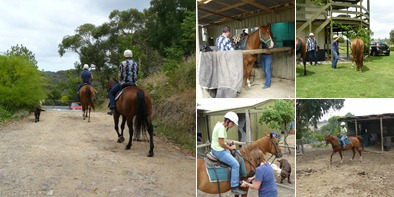
Phew a few busy days to catch up on!  Eventually got the car back with new water pump and fingers crossed it all works!  Coco and I went for a walk in Belair National Park one of the few parks where dogs are allowed.  We ended up walking for 1.5 hours as I got lost and took a trail that didn’t exactly go to the exit as I thought it would, despite this it was a lovely walk through a very nice park.  It would be good to see it in winter when it is green.  Margy and John decided to go horse riding one morning.  My one and only experience of horse riding many years ago was not memorable for the wrong reasons hence my reticence to get on one again, but Margy being a very patient instructor talked me through the process, even got into a trot and that was it for me.  At least I got on!  John hasn’t ridden for a few years but he looked like he knew what he was doing. They even had a gallop up a very steep hill on the way home.  As a reward the horses (Jazz and Spratt) got hosed down (they love it) and got to spend the rest of the day devouring the lawn (they love that too). 
 
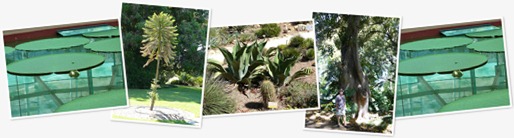
The next day was a big day, we spent the day in the city, visiting the Migration Museum (very interesting), the botanic gardens (very lovely) and Haigh chocolates (even lovelier).  Many walks/trails and gardens such as the Mediterranean, herbs, cactus, waterlillies and fig walk make up the gardens.  The garden comprises 84 hectares in the city centre, are very well maintained with lots of green lawns which is nice to see in such a dry brown State.  Now to Haigh’s chocolates – well these are very delicious hand made (yes hand made) chocolates and we went on a tour of the factory and learnt all about the cocoa bean and the process to being a chocolate.  We had samples - very generous samples and complimentary tea and coffee all for free, although its impossible to walk out of there without buying something!  They are committed to the environment and help environmental awareness by being the first chocolatier to make the bilby easter chocolate.  They also make frogs, native fish and more recently panda chocolates.  Unfortunately you can’t buy their chocolates readily they only have stores in Adelaide, Melbourne and Sydney.  They can be bought online.  We recommend them.

04 February 2010

Days 145-147 – Adelaide (31 Jan – 3 Feb)

Had some luck today in that Trevor has a nephew who is an IT whiz who offered to look at our external hard drive that we used to store or our pictures from this trip and all the stuff off our home computers.  This drive somehow got corrupted before Xmas and we couldn’t use it which was a real blow to us.  Quotes to get it reinstated were about $2000 with no guarantee of success.  Anyway Charles was able to restore the drive for us (thank goodness) for the fraction of the cost.  We were so relieved.  We had a couple of nights showing Margy and Trevor our videos and photos of Africa, Maldives and Sri Lanka from a couple of years ago. Hope they weren’t too bored!

Visited the Warrawong Sanctuary on Sunday night for a nocturnal guided walk.  Warrawong Wildlife Sanctuary was first established in 1969 when dairy land was revegetated with native trees and shrubs to attract native animals and birds. In 1982 the 35 acres was enclosed with feral-proof fencing. Once the fence was completed, the bird population flourished and the release of many native animals began, including the elusive platypus.  On 1st January 1985, Warrawong opened to the general public for the first time.  Today, Warrawong is home to 100 species of birds and many native mammals, most of which are nocturnal and highly endangered.  We were part of a small group and spent 1.5 hours walking around the sanctuary.  It is very well set out with 5 habitat areas.  The feral fence is 8 feet high and is very effective at keeping foxes, cats etc out.  We saw bandicoots, potoroos, brushtail possum with baby, tammar wallabies, rufus bettongs and a woylie.  We spent some time looking for a platypus but unfortunately didn’t see one (only a very quick poke at the surface). There are 15 in the park. 

The next day Monday (1 Feb) John had to return the car to the radiator mechanic as the new radiator we had had fitted the week before was not holding water.  the result was we had to get a new water pump (more unexpected car expenses).  The car had to be left overnight so Margy and I drove to collect John after lunch and had fish and chips for lunch at a lovely beachside spot called Moana.   We also went to Port Noarlunga which has some good snorkelling spots and we walked out along the jetty to exposed reefs (low tide).  Looked great for snorkelling and very accessible from the end of the jetty. There were a few school groups snorkelling, and kayaking. It was a perfect day for it, warm and very calm water.  I actually bought a 2mm 3/4 wetsuit for snorkelling and kayaking.  I’ve been wanted one for a while and they were on special so I grabbed it.  Later that day Trevor wanted to put a separator into each of his beehives (he has 5) to keep the queen bee out of the honey chamber (so she doesn’t lay larvae in it) so the honey can be harvested at a later stage and John helped him by smoking out the bees to make then docile (see pics).  Something he hasn’t done since he was about 12 years old! 


30 January 2010

Days 139-144 – Adelaide (25-30 Jan) Week 20

Left Aldinga for Adelaide to stay with friends Trevor and Margy who live in the Adelaide hills.  About an hours drive north east.  There are some major hills in this area and Trevor had given us directions for the least hilly way (5km climb) to get to there place but even so we overheated and had to pull over.  Definitely need to take the car in to get the radiator fixed later in the week.  Trevor and Margy live on 10 acres and have wonderful views over the ranges and sea glimpses.  It is a lovely spot to stay.   They have a male chocolate labrador (Kora) and a female yellow labrador (Halle), five chickens, an aviary of budgies and three horses.  So a real menagerie. Its great and Coco loves it.  They have five grown up children with only two still living at home (occasionally).  We had a lovely Australia Day breakfast with some of Margy’s friends and a couple of their children and their partners.  The weather was perfect, John cooked brekkie on the bbq (he doesn’t have to be at Rotary to cook brekkie) and we had croissants, champers, fruit platters, lamingtons and anzac biscuits to name a few.  Sarah (youngest daughter) and her boyfriend Brett gave us a demonstration on frisbee.  They are both very good players and play competition frisbee.  We didn’t know there was such a thing.  In the afternoon we went for a drive to town called Springton in the Barossa Valley to look at a church that was for sale that Rachel (Trevor and Margy’s oldest daughter) and her husband were interested in buying to live in.  Unfortunately it had been sold.  The next day (Wed) John and I went to the Mt Lofty Summit which overlooks the city.  It is 710 metres above sea level, it was destroyed in Ash Wednesday 1983 fires along with 28 human lives and 257,000+ livestock and animals (only I would remember that number right).  We watched a short DVD on the fire and the devastation was horrendous.  At the summit there is fire watch tower which really has a good vantage point for many miles.  From there we went to Waterfall Gully and was surprised to find there was water running.  Very very steep hills to get there and it is amazing to see houses perched right on the edge of a hill.  I would be nervous living in some of them.   Thursday John and I spent and the day at the Noarlunga Colonnade which is a really large shopping centre.  From 8.30am to 5.15pm we killed time while our radiator was being fixed.  Don’t want to see another shopping centre for a while.  Friday saw Trevor take the day off work and the four of us went to Hahndorf a lovely town in the Barossa valley.  One of the Adelaide Hills' most famous towns, Hahndorf is Australia's oldest surviving German settlement.  There is still a strong German flavour in Hahndorf, most evident in the smallgood outlets and German bakeries that line the bustling main street.  Sir Hans Heysen a famous painter was one of the original settlers here.  The Beerenberg jam factory is not far from town.  It is a great town to visit particularly if you are looking for different gifts and it is very popular with tourists.  We had lunch at Udder Delights following some cheese tasting which was delicious followed by dessert at No. 5 a wonderful chocolate shop.  They make chocolate with pure belgian chocolate and we had the best hot chocolate, a choice of milk or dark chocolate.  John and I tried the dark hot chocolate.  It was the delicious as were the Belgian waffles and the chocolate tiramusu.  Very decadent.  Later in the afternoon Trevor and Margy bought the deal of the year, a brand new Toyota Yaris that someone had won as a prize and didn’t want it.  They got a real bargain.  The highlight of Saturday was a KOALA.  Yes we saw our first wild koala.  It was about 8.20pm and we were out walking Coco when I spotted it.  Fantastic!!  It was a darker colour than we were expected and he/she was a very healthy looking specimen.  Not as high in the tree as I would have thought and not in particularly tall gum tree either.  We were chuffed to see it but as you would expect the one time we didn’t have the camera so couldn’t take a picture - but we did see it. 
Addendum – next morning went for a walk to see if I could find the koala again and I did (well might not be the exact one but it will do).  


24 January 2010

Days 137-138 – Aldinga Beach Adelaide (23-24 Jan)

Went to the one and only cow race in Australia today at Mt Compass 20 mins drive inland on the way to Victor Harbour.  It is very much a rural event with a lot of the locals attending.  There are a lot of events during the day to keep crowds entertained and the highlight is the cow auction and then two cow races followed by the Cup.  It is in its 37th year and seems very popular. the day starts at 12noon and ends up late at night with bands from 6.30pm.  All funds raised go to charity.  The highest bid for a cow was $5000.  The cows are loaned by local farmers for the day and the auction is purely fund raising.  Riders are chosen for each cow but it is obvious the cows nor the riders have any experience at this.  We didn’t realise the cows would be ridden thought they would wear colours and the first one to the end wins.  We only stayed for the first race (of sorts) as it was getting late so didn’t see the big race.  One of the prior events was a working dog demo and two were kelpies who looked very similar to Coco – it could almost have been her except they were males.  They rounded up sheep and then cattle which we hadn’t see before.  Other events included a milk skulling competition, rubberboot marathons (wet boots and surfaces) and an assortment of proud ute drivers showing off their utes which some were quite speccy.  Have to say it didn’t come close to the dog in a ute competition we have in WA.  It was quite a fun day and there were lots of stalls selling all kinds of local produce/crafts.  It would good if Cowarmup (cow town for none WA-ians) had something like this.  Mt Compass is a very rural agricultural area and I think I heard the commentator say that 9 months of the year they have rain!  Could have misheard that – seems odd when the rest of the state is in drought.  We have been dodging the tour down under bike race and driving to Mt Compass today we actually had to drive along some of the route, you should have seen the masses of spectators alongside the roadways – we reckon half of Adelaide must have been there – it was amazing to see so many people for quite a distance.

Today (Sunday) drove the west side of the Fleurieu Peninsula to Victor Harbour stopping along the way at Goolwa and Hindmarsh Island – where the Murray River meets the ocean.  Goolwa is a lovely little town – very touristy and today was market day with a lot of local produce/craft on sale.  Very busy spot probably because of the long weekend (for some).  To get to the Murray Mouth you have to drive over a very impressive bridge to Hindmarsh Island.  The Murray River traverses 610kms through SA to get to the ocean.  Due to the drought dredging of sand has to be done to stop the river mouth closing at a cost of $6M per annum.   Amazing the difference between the temperature 40 odd kms can make – it was really chilly here and windy so we didn’t kayak like we were thinking of doing.   We came across a town called Currency Creek which had a really interesting cemetry (normally wouldn’t stop at these) with some really old headstones the oldest we spotted was 1857.  Onto Victor Harbour with a population of 12,000 in town and 20,000 in district.  Again a very popular tourist destination with many holidaymakers from Adelaide.  Apparently a lot of Adelaidians flee here to escape the heat as it can be 10 degrees cooler and it was chilly in shade today.  The foreshore reminded us a little of Busselton but with much more activity and things to do and see.  Driving home we took an inland route and found a spot called Glacier Rock, quite a significant geological area.  A lot of the scenery in the lower Fleurieu reminded us of the SW of WA, take out the ranges and it we could easily be mistaken for being home.

22 January 2010

Days 134-136 – Aldinga Beach Adelaide (20-22 Jan)

Last minute decision to drive to Adelaide from Burra.  We were going to stay a little longer in the Clare Valley but decided we had seen enough wineries and old buildings.  Dropped into Kapunda (old copper mining town) and it was too hot so kept going.  Joys of travelling on a whim.  Aldinga is about 43kms south of Adelaide on the top tip of the Fleurieu Peninsula.  This peninsula is very popular with holidaymakers from Adelaide due to its proximity to the city and the further south you go the cooler the weather.  Kangaroo Island is off the bottom tip of the peninsula via a ferry from Cape Jervis.  Cape Jervis is 110kms south from Adelaide and is as far as you can go before you have to swim.  We were going to go to Kangaroo Island until we found out it would cost over $300 to get there and back (us and the car) for a 45 minute trip.  So opted not to go.  Apparently not many locals go due to the cost.  The park we are at is about a 5 minute walk to the beach which is very pretty.  The beaches here have rolling hills as a backdrop into the ocean and it is very scenic and quite different landscape to what we are used too.  We didn’t realise however that the closest beach to us (walking distance at least) is a nudist beach – and yes they do get around in the nuddie.  As on Cable Beach in Broome majority are old codgers – honestly some things are best left to the imagination!  To get to the non nuddie beach you have to walk the gauntlet for about 500m.  Just hope no-one stops you for a chat as where would you look?  It was a hot night last night and Coco and I went down for a swim and it was beautiful.  Real ocean with waves and a drop-off!  Compared to what we have seen so far on the Eyre Peninsula it was heaven.  Each day we have been here there has been a spotter plane surveying the beaches for sharks and the first night its shark siren went off a few times.  People still chance a quick dip!  Apparently there is a reef nearby - Aldinga Reef - which is known for its shark sightings. 

We drove the east side of the Peninsula 110kms to the bottom at Cape Jervis.  Some very pretty scenery, the hills are just lovely, whilst brown and dry still lovely.  We stopped at the Myponga Reservoir which had a fair bit of water in it which surprised us and yes lovely scenery.  Some great beach spots along the way again with the hills as a backdrop.  Certainly is a very picturesque part of the country.  We were considering snorkelling at a place called Rapid Bay and Second Valley where leafy sea dragons can sometimes be seen, but John put the scares on us about the sharks!  Second Valley was full of kids but could be worth a snorkel as it is more protected once the kids go back to school.  At Rapid Bay we would snorkel at the jetty which is 470m out to sea and open water – would be looking over our shoulders out there a fair bit.   Also the water is so cold about 16 degrees!  Really need a wetsuit of sorts to stay in the water for a good period of time. 

There is a huge shopping centre at a suburb called Noarlunga, 20kms north of Aldinga which we went to check out. We were looking for a radiator workshop as we were having radiator issues and discovered it nearby.  Don’t believe there is a shopping centre in WA that comes close to it in size.  Lots of franchise stores that we don’t get in WA such as a nut store, cakes, greek yoghurt, cheap stores like Red Dot.  Could get lost in there quite easily.  Have to be honest shopping loses its appeal when you can only buy on need not want due to lack of space!

One thing we only found out when we got here was the Bike Tour Down Under is being held in this part of the world over this weekend.  There are 8000 competitors and everywhere is busy particularly roads and accommodation.  So we have had to time our trips out when the bikes aren’t on our route.   We leave here on Monday heading back to Adelaide and staying with friends of ours Trevor and Margy who live on some acreage in the hills area.  We are looking forward to catching up with them again as we haven’t seen them for at least 5 years. 


19 January 2010

Days 132-133 – Burra (18-19 Jan)

120kms today from Crystal Brook to Burra in the Clare Valley. A very pretty drive through some lovely rolling hills. The Clare Valley is a wine growing region, one of three in SA.  The main hub of wineries is in the town of Clare 40kms away. Copper was discovered in Burra in 1845 and the mine was one of the richest mines the world had known. Quite a bit of history here but expensive to see and being a tourist town they charge for everything.  There is a charge for entry into each museum of $5.00/person/museum or $20.00/person to enter 8 of them.  They also want anything from $5 to $15 for guidebooks.  We did discover the best coffee we have tasted for a long long time at a antique/bookshop coffee shop. Many antique/curio shops here more pricey than the one in Crystal Brook.  Were going to travel 40kms to Clare today (Tues) but were too lazy to pack up so stayed another day in Burra.   We dusted off the bikes and rode 3kms to an apple cidery for some tasting, uphill most of the way on dirt roads – we needed a cider by the time we got there but coming home was much easier and yes we bought a bottle.  Another town with lots of historic buildings, many of them have been converted into B&Bs or accommodation quarters.  Quite a pretty town and it is very popular in spring and autumn. 

diprotodonIn 2001 fossils of a Diprotodon were discovered nearby Burra and before becoming extinct 50,000 years ago was Australia’s largest marsupial resembling a giant wombat.  The fossils are on display in the shire office.  Interesting to see.